Showing posts with label Article. Show all posts

Saturday, December 15, 2012

It's My VW


It's Not A Car....It's Volkswagen
VW Combi Brasil - 1981


VW Combi Brasil 1981, VW Combi Classic, Classic Car Volkwagen
VW Combi 1981

Driver
looks from the front

 room to sleep

the engine is still good

Related Post :
 

Friday, November 9, 2012

Category "Peugeot vehicles"

Pages in category "Peugeot vehicles"

The following 131 pages are in this category, out of 131 total. This list may not reflect recent changes

1

2

3

4

5

6

6 cont.

8

9

B

D

E

F

H

J

L

P

Q

R

S

T

T cont.

V

Monday, November 5, 2012

List of Mercedes-Benz vehicles

1886 - 2000/ at Present
List of Mercedes-Benz vehicles
The following is a List of Mercedes-Benz vehicles indexed by year of introduction.
This transport-related list is incomplete; you can help by expanding it.

Working replica of the 1885 Benz Motorwagen in Frankfurt, 2007
Daimler and Benz vehicles
Benz Patent-Motorwagen 1886
Daimler Motor Car 1886
Benz Velo 1894
Mercedes 35 hp 1901
Mercedes Simplex 1902
GP Mercedes 1908
Blitzen Benz 1909
Mercedes Grand Prix Racing Car 1914
Benz 10/30hp 1921

Mercedes-Benz cars
1920s
  • K (Kurz-short) 1926
  • S 1927
  • SSK 1928
  • SS 1928
  • 10/50hp "Stuttgart" 1929

1930s
  • Mercedes-Benz Mannheim 350/370 (W10) 1929-1934
  • 170 Saloon 1931-1932
  • 130H 1934
  • 150H 1934-6
  • W31 1934-1939 (6 wheels) [1]
  • 170V 1935-1953
  • 770 (Grosser) 1930-1943 in two series:
  • W07 1930-1938
  • W150 1938-1943
  • 500K 1934-1936
  • 540K 1936-1943
  • 260D 1936-1940
  • 320 Saloon 1937
  • W125 1937
  • 230 1938
  • W163 GP 1939
1950s
180 1953-1962
190 1956-1961
W196 GP 1954
220 1954-1959
300SLR 1955 (W196S)
300S mid 1950s
300SL 1954-1963 in two series:
  • Gullwing Coupe 1954-1957
  • Roadster 1958-1963
190SL 1955-1963

1960s
Mercedes-Benz W111/220SE 1960-1966
250S, 250SE 300SE 280S 280SE 280SEL (W108/W109) 1965-1972
230 1968-1972
250 1968-1972

1970s
280 1972-1976
280C 1973-1976
300D 1975-1976
G-Class 1979-
SL-Class 1957-
  • W113 1963-1971
  • R107 1972-1989

1980s
190 1982-1993
300D 1977-1985
300CD 1978-1985
300SD 1981-1985
300SDL 1986-1987
300TD 1978-1985
350SDL 1990-1991
500SE 1984-1991
500SEC 1984-1991
500SEL 1984-1991
560SEL 1986-1991
560SEC 1986-1991
300E 1986-1993
300CE 1986 - 1993

1990s
A-Class 1997-
C-Class 1993-
CLK-Class 1998-
E-Class 1995-
SL-Class 1989-2001
Vaneo 1997-2004

2000s
Mercedes-Benz A-Class
  • W168 2000-2004
  • W169 2004-
Mercedes-Benz B-Class 2005-
Mercedes-Benz C-Class
  • W203 2000-2007
  • W204 2007-
Mercedes-Benz CL-Class
  • W215 2000-2006
  • W216 2007-
Mercedes-Benz CLK-Class 2000-
Mercedes-Benz CLS-Class 2004-
Mercedes-Benz E-Class
  • W210 1995-2002
  • W211 2003-2009
  • W212 2009-
Mercedes-Benz G-Class 2000-
Mercedes-Benz GL-Class
  • X164 2007-
Mercedes-Benz M-Class
  • W163 1998-2005
  • W164 2006-
Mercedes-Benz R-Class 2006-
Mercedes-Benz S-Class
  • W220 1999-2005
  • W221 2006-
Mercedes-Benz SLK-Class
  • R170 1998-2004
  • R171 2005-
Mercedes-Benz SL-Class 2001-
  • R230
Mercedes-Benz SLR-McLaren 2003-2009
  • 722 Edition 2006-2009
Mercedes-Benz SLS AMG 2010-

Mercedes-Benz trucks
1960s
Mercedes-Benz L-series truck

1970s
Mercedes-Benz NG (Neue Generation)

1980s
Mercedes-Benz SK (Schwere Klasse)

2000s
Mercedes-Benz Atego - light truck from 7 to 16 tonnes
Mercedes-Benz Axor - mid-sized truck from 18 to 26 tonnes in rigid and articulated
Mercedes-Benz Actros - heavy duty rigid and premium articulated — 18 to 250 tonnes
Mercedes-Benz Econic - low floor version of the Axor for refuse and specialist applications
Mercedes-Benz Unimog - for special purpose applications and transport across extreme terrain
Mercedes-Benz Zetros - off-road truck for extreme operations
1828L (F581) Mobile Casualty Treatment Centre
1517L Mobile Casualty Treatment Centre

Mercedes-Benz vans
1950s
Mercedes-Benz L 319 - forward control van with numerous body variants

1960s
Mercedes-Benz TN or T1 - mid-sized van, predecessor to the sprinter
Mercedes-Benz T2 - heavy Van
All other previous models on the German Wikipedia

2000s
Mercedes-Benz Vito - light van based on the Viano MPV with a payload of approx 1 tonne
Mercedes-Benz Sprinter - mid-sized van, based on a joint venture with the Volkswagen Commercial Vehicles Crafter, with payloads of 2 to 6 tonne. Also produced as a Dodge in USA and Canada with the name Freightliner Sprinter.
Sprinter 414 416CDI - ambulance
Sprinter 316CDI - light ambulance
Mercedes-Benz Vario - heavy van with similar load to a light truck (7.5 tonne)

Concept models
Mercedes-Benz C111 - sports car and test vehicle for different high performance engines (wankel engine and later diesel engines) shown in 1969, 1970 and 1978
Mercedes-Benz Auto 2000 - four-door saloon shown in 1981 Frankfurt Auto Show
Mercedes-Benz NAFA - microcar, 1982
Mercedes-Benz C112 - sports car and development mule developed in 1991
Mercedes-Benz F 100 - car introduced in 1991 North American International Auto Show
Mercedes-Benz Coupe Concept - car introduced in 1993 Geneva Motor Show
Mercedes-Benz Vario Research Car - one car, four vehicles, introduced in 1995 Geneva Motor Show
Mercedes-Benz F 200 Imagination - two-door coupé introduced in 1996 Paris Motor Show, preview of 1999 S-Class (W220)
Mercedes-Benz F 300 Life Jet - three-wheel car/motorcycle unveiled in 1997 Frankfurt Motor Show
Mercedes-Benz Vision SLR - prototype of Mercedes-Benz SLR McLaren, unveiled in 1999 North American International Auto Show
Mercedes-Benz Vision SLA - convertible with details of the SLR, but based on the A-Class platform, unveiled in 2000 North American International Auto Show
Mercedes-Benz Vision GST - car shown in 2002 North American International Auto Show, preview of R-Class
Mercedes-Benz F 400 Carving - a two-seat roadster unveiled in 2002 Tokyo Motor Show
Mercedes Benz F 500 Mind - four-door fastback saloon unveiled in 2003 Tokyo Motor Show
Mercedes-Benz F 600 HYGENIUS - compact fuel cell car, unveiled in 2005 Tokyo Motor Show
Mercedes-Benz Bionic - car unveiled in 2005 DaimlerChrysler Innovation Symposium in Washington, modeled after boxfish
Mercedes-Benz Ocean Drive - a four-door convertible based on the S600, shown in 2007
Mercedes-Benz F700 - large luxury saloon featuring the small capacity / high output DiesOtto engine, unveiled at the 2007 Frankfurt Motor Show.
Mercedes-Benz ConceptFASCINATION - shooting-brake giving a preview of the 2010 E-Class (W212), unveiled at 2008 Paris Motor Show
Mercedes-Benz S 400 BlueHYBRID
Mercedes-Benz F-Cell Roadster, 2009
Mercedes-Benz F 800 Style - four-door sedan shown in 2010 Geneva Motor Show
Mercedes-Benz F 125! - experimental luxury vehicle shown in 2011

See also related post to: Mercedes-Benz vehicles
All Makes Vehicles

Source From Wikipedia, the free encyclopedia
http://en.wikipedia.org/wiki/List_of_Mercedes-Benz_vehicles

Thursday, October 25, 2012

List of BMW vehicles

    BMW CS concept car at the 2007 Australian International Motor Show.

The following is a List of BMW vehicles indexed by year of introduction.

Cars
1920s
3/15 saloon 1927-1931

1930s
3/15 DA-3 Wartburg roadster 1930-1931 (based on the 3/15, BMW's first roadster)
3/20 PS 1932-1934
303 saloon 1933-1934 (first use of the "kidney" grille and straight-6 engine)
309 saloon 1934-1936 (a four-cylinder version of the 303)
315 saloon 1934-1937
315/1 roadster 1934-1937 (roadster based on the 315)
319 saloon 1935-1937 (larger-engined version of the 315)
319/1 roadster 1935-1937 (larger-engined version of the 315/1)
329 convertible 1937 (convertible based on the 319)
326 saloon and cabriolet 1936-1941
327 coupé and cabriolet 1937-1941
320 saloon and cabriolet 1937-1938 (based on the 326 with 329 suspension)
321 saloon and cabriolet 1938-1941
BMW 335 sedan 1939 –1941
328 Roadster 1936-1940

1940s
326 sedan and cabriolet 1945-1946 (limited production following World War 2)
321 saloon and cabriolet 1945-1950 (resumed production after World War 2)
327 coupé and cabriolet 1945-1955 (resumed production after World War 2)
340 sedan 1949-1953 (later cars badged as EMW 340)

1950s
501 saloon 1952–1958
BMW 502 1954–1964 (V8-engined version of 501)
Isetta 250 micro car 1955–1956
Isetta 300 micro car 1956–1962
600 micro car 1957–1959 (4 set car based on Isetta 300)
503 coupe and cabriolet 1956–1959
roadster 1956–1959
700 saloon and coupe 1959–1965

1960s
3200 CS coupe 1962–1965 (based on the 503)
1500 saloon 1962–1966 (first of the "New Class" saloons)
1800 saloon 1963–1971
1600 saloon 1964–1968
1602 saloon 1966–1975 (2 door version of 1600)
2000C/CS coupe 1965–1969
E9 coupe 1968–1975
2000 saloon 1966–1972
BMW 2002 saloon 1968–1976 (2 door version of 2000)
E3 saloon 1968–1977

1970s
E12 mid-sized sedan 1972–1981 (first of the "5 series" mid-size sedans)
E24 mid-sized coupe 1976–1989
E21 compact sedan and convertible 1975–1983 (first of the "3 series" compact sedans)
1502 saloon 1975–1977 (1.5L engine version of 2002)
BMW 1802 1975–1977 (1.8L engine version of 2002)
E23 large sedan 1977–1986 (first of the "7 series" large sedans)
BMW M1 supercar 1978–1981 (chassis code E26)

1980s
E28 5 series compact mid-sized sedan 1981–1988
E30 3 series sedan, convertible and estate 1982–1994
Z1 roadster 1989-1991
E32 7 series large sedan 1986–1994
E34 5 series mid-sized sedan 1988–1996
E31 8 series 2+2 coupe 1989–1999

1990s
E36 3 series sedan, coupe, convertible and touring 1990–2000
E36 Compact hatchback 1993–2000 (first generation Compact)
Z3 coupe and roadster 1996–2002
M coupe 1998-2002 (first generation M Coupe)
E39 5 series mid-sized sedan 1995–2003
E53 X5 mid-sized SUV 1999-2006 (BMW's first SUV)
E38 7 series large sedan 1995–2001
E46 3 series sedan, coupe, convertible and touring 1998–2006
E52 Z8 roadster 1999-2003

2000s
E46 Compact hatchback 2000-2004 (second generation Compact)
E65/66/67/68 large sedan 2002–2008
E85/E86 Z4 roadster/coupe 2002–2008 (first generation Z4)
E83 X3 crossover SUV 2003-2010
E60 5 series mid-sized sedan 2003–2010
E63/E64 mid-sized coupe/convertible 2003-2011
E61 estate 2004-2011
E70 X5 mid-sized SUV 2006-present (second generation X5)
E71 X6 mid-sized crossover 2008-present (2 door version of X5)
E81/E87 1 series hatchback 2004-2011 (first generation 1 Series)
E82/E88 1 series small coupe/convertible 2007-2011
X1 compact crossover SUV 2009-present
X3 crossover 2004–present
E90/E91/E92/E93 3 series sedan/touring/coupe/convertible 2005-2011
F01/F02/F03/F04 7 series large sedan 2008-
E89 roadster 2009–present (second generation Z4)
F10 5 series mid-sized sedan 2009–present
F11 5 series mid-sized estate 2009-present
F07 5 series GT 4 door coupe 2009-present

2010s
F12/F13 mid sized coupe/convertible 2011-present
F25 X3 crossover SUV 2011–present
F20 1 series hatchback 2011–present
F30 3 series compact sedan 2012–present

Prototypes

BMW CS Concept
1972 Turbo[1]
1990 M8: A high-performance version of the 8 Series coupe designed to compete with the likes of Ferrari.
1991 E1 Electric car.[2]
1993 Z13[3]
1995 Just 4/2 A two-seater open sports car with a BMW K series motorbike engine positioned behind the driver and passenger.[4][5]
1995 Z18[4]
1999 Z9 Designed by Adrian van Hooydonk that marked a departure from BMW's traditional conservative style, causing some controversy among BMW enthusiasts.[citation needed] This later on became the 6-series.
750hL At Expo 2000. A 7 Series sedan powered by a hydrogen fuel cell engine. As of March 2007, there are as many as 100 750hL vehicles worldwide for testing and publicity purposes.[citation needed]
2000 Z7[6]
2001 X-Coupe
2007 CS Concept
2008 Concept 1 series tii: A high-performance tuned version of the 1 Series. "tii" references the 2002tii model.
2008 GINA Based on the structure of a Z8 with a light fabric skin and hydro-electric technology to allow the shape to change.[7]
2008 Concept X1: BMW's first compact Sports Activity Vehicle.
2008 Concept 5 Series Gran Turismo First of the BMW Progressive Activity Series.
2009 Vision Efficient Dynamics Presented at the Frankfurt Motor Show.
2009 C1-E An electric version of the C1 scooter.
2010 Gran Coupe First sketches of the new 6 series with 4 doors.

M models
Main article: BMW M#Lineup

Production series codes
BMW 501 - (1952–1958) Sechszylinder Limousine
BMW 502 - (1954–1964) Achtzylinder Limousine
BMW 503 - (1956–1959) Achtzylinder Coupé und Cabrio 1956-59
BMW 507 - (1955–1959) Achtzylinder Roadster
BMW 3200 CS- (1956–1959) Achtzylinder Coupé und 1 Cabrio 1961-65
BMW Typ100 - (1955–1962) BMW Isetta
BMW Typ106 - (1957–1959) BMW 600
BMW Typ107 - (1959–1965) BMW 700
BMW Typ110 - (1961–1964) BMW 700 Cabriolet
BMW Typ114 - (1966–1976) BMW 1600-2, 1602-2002TI, 1502
BMW Typ115 - (1963–1964) BMW 1500
BMW Typ116 - (1964–1966) BMW 1600
BMW Typ118 - (1963–1971) BMW 1800-1800TI/SA
BMW Typ120 - (1966–1970) New Class Coupé 2000C/CS
BMW Typ121 - (1966–1972) BMW 2000-2000tii
BMW E3 — (1968–1977) 2.5, 2.8, 3.0, 3.3 "New Six" sedans
BMW E9 — (1969–1975) 2800CS, 3.0CS, 3.0CSL "New Six" Coupés
BMW E12 — (1974–1981) 5 Series
BMW E21 — (1976–1983) 3 Series
BMW E23 — (1977–1986) 7 Series
BMW E24 — (1976–1989) 6 Series
BMW E26 — (1978–1981) M1
BMW E28 — (1981–1987) 5 Series
BMW E30 — (1984–1991) 3 Series (1982-1983 E30 sold in Europe)
BMW E31 — (1989–1997) 8 Series
BMW E32 — (1986–1994) 7 Series
BMW E34 — (1988–1995) 5 Series
BMW E36 — (1992–1999) 3 Series
BMW E36/5 — (1995–1998) 3 Series Compact (US market known as "318ti")
BMW E36/7 — (1996–2002) Z3 Series Roadster
BMW E36/8 — (1998–2002) Z3 Series Coupé
BMW E38 — (1994–2001) 7 Series
BMW E38/2 — (1994–2001) 7 Series long wheelbase
BMW E38/3 — (1998–2001) 7 Series Protection
BMW E39 — (1995–2003) 5 Series
BMW E46/5 — (2000–2004) 3 Series Compact
BMW E46/4 — (1998–2005) 3 Series Sedan
BMW E46/3 — (1999–2005) 3 Series Touring/Sports Wagon
BMW E46/2 — (1999–2006) 3 Series Coupé
BMW E46/C — (1999–2006) 3 Series Convertible
BMW E52 — (2000–2003) Z8
BMW E53 — (2000–2006) X5
BMW E60 — (2004–present) 5 Series
BMW E61 — (2004–2007) 5 Series Touring/Sports Wagon
BMW E62 — (2004–2007) 5 Series Protection
BMW E63 — (2004–present) 6 Series Coupé
BMW E64 — (2004–present) 6 Series convertible
BMW E65 — (2001–2007) 7 Series short wheelbase
BMW E66 — (2001–2007) 7 Series long wheelbase
BMW E67 — (2001–2007) 7 Series Protection
BMW E68 — (2005–2007) Hydrogen 7
BMW E70 — (2007–present) X5
BMW E71 — (2008) X6
BMW E72 — (2009) X6 Hybrid
BMW E81 — (2007–present) 1 Series (3-door)
BMW E82 — (2007–present) 1 Series Coupé
BMW E83 — (2004–present) X3
BMW E84 — (2009–present) X1
BMW E85 — (2003–present) Z4
BMW E86 — (2006–present) Z4 Coupé
BMW E87 — (2004–present) 1 Series (5-door)
BMW E88 — (2008) 1 Series Convertible
BMW E89 — (2009) Z4
BMW E90 — (2005–present) 3 Series
BMW E91 — (2005–present) 3 Series Touring/Sports Wagon
BMW E92 — (2006–present) 3 Series Coupé
BMW E93 — (2007–present) 3 Series Convertible
BMW F01 — (2008) 7 Series
BMW F02 — (2009) 7 Series long wheelbase
BMW F03 — (2008) 7 Series Protection
BMW F04 — (2011) 7 Series ActiveHybrid
BMW F07 — (2009) 5 GranTurismo
BMW F10 — (2010) 5 Series
BMW F11 — (2011) 5 Series Touring/Sports Wagon
BMW F12 - (2011) 6 Series
BMW F13 - (2011) 6 Series Convertible
BMW F20 - (2011) 1 Series
BMW F25 - (2012) X3
BMW F30 - (2012) 3 Series

Model nomenclature
Since 1972, BMW model names have generally been a 3 digit number is followed by 1 or 2 letters
the first digit represents the chassis type (e.g. 3 series, 5 series)
the last two digits represent the engine displacement in litres times 10.[8]
the letters provide additional information on the model variant (see below).

Commonly used letters at the end of the model name are:
C = coupé, last used on the BMW E46 and the BMW E63 (dropped after 2005 model year)
c = cabriolet
d = diesel
e = eta, an engine tuned for fuel efficiency rather than power (from the Greek letter 'η')
h = hydrogen
i = injected (fuel injection)
L = long wheelbase
s = sport, this can represent either upgraded interior/cosmetic options or increased engine power depending on the model. For the E36 range, all models with "s" in the name were coupes/convertibles)
sDrive = rear wheel drive
T = touring (wagon/estate)
ti = hatchback for the BMW 3 Series hatchback
td = "Turbo Diesel" ( 524td, 525td/s, 324td, 325td/s, 318tds), or hatchback diesel ( E46 Compact 318td, 320td; E36 Compact 318tds)
x / xDrive = BMW xDrive all wheel drive

From Wikipedia, the free encyclopedia

History, Collecting, Investment, Rarity and Condition Categories

History
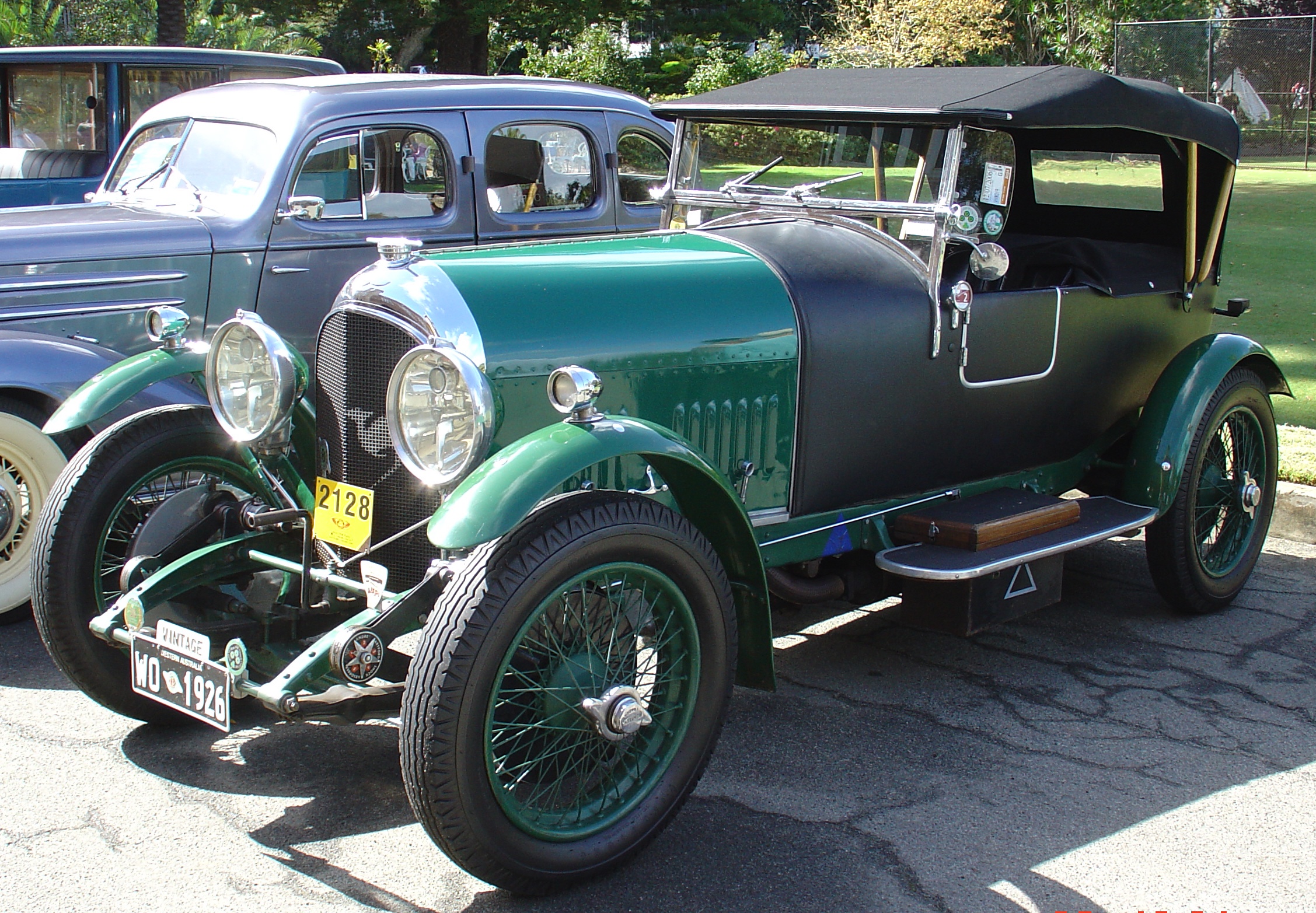
The vintage era in the automotive world was a time of transition. The car started off in 1919 as still something of a rarity, and ended up, in 1930, well on the way towards ubiquity. In fact, automobile production at the end of this period was not matched again until the 1950s. In the intervening years, most industrialized states built nationwide road systems with the result that, towards the end of the period, the ability to negotiate unpaved roads was no longer a prime consideration of automotive design.

Cars became much more practical, convenient and comfortable during this period. Car heating was introduced, as was the in-car radio. Four-wheel braking from a common foot pedal was introduced, as was the use of hydraulically actuated brakes.[1] Power steering was also an innovation of this era. Towards the end of the vintage era, the system of octane rating of fuel was introduced, allowing comparison between fuels. In 1923 the gasoline additive Ethyl made its debut at the Indy 500 that resulted in a boost in octane from the 50's to the 80's[2] In the United States drive-in restaurants were introduced as well as suburban shopping centers and motels.

Alfred P. Sloan and Harley Earl of General Motors, and Walter P. Chrysler capitalized on advertising the automobile’s role in the life of the consumer for more than just the utilitarian value compared with the horse. The stock market crash of 1929 started the layoff of automotive workers and many new companies went bankrupt but over two million cars were still produced in 1929 and 1930.[3] Horatio Earle, known as the "Father of good roads" had proposed the government create an Interstate highway system in 1902 and in 1909 built the World's first mile of concrete road on Woodward Avenue in Detroit.

Collecting
For the average person car collecting is a hobby. A person usually has a fascination with a certain vehicle or a history with one so seeks a certain make or model. Finding an antique car at an affordable price is not hard but can be relatively expensive depending on the condition or the desired end result. The less work required on a vehicle equates to a higher price. The more work required means a cheaper initial cost, but more in the long run, and a person's level of restoration experience plays an important part.[8]

Investment
Comedian and avid car collector Jay Leno stated, "Any car can be a collector car, if you collect it."[9] Antique car collecting as an investment can be rewarding but most serious investment collectors seek rare or exotic cars and original unmodified cars hold a more stable price. Collecting as an investment requires expertise beyond enthusiast collecting and the standard of quality is far higher as well as a need for investment protection such as storage and maintenance. A short-term investment collector must be able to find a vehicle that has market value that is expected to rise in the foreseeable near future. A long-term investment collector would be less interested in any short-term value seeking to capitalize on an expected value rise over a period of years and a vehicle must have certain intrinsic values that are common to other investors or collectors of both short and long term.

Rarity
Antique vehicles have a higher value according to the rarity that usually (but not always) resulted in some reason for a lack of numbers at production. Certain year and model cars became popular to turn into hot rods thus destroying the original condition. Other models were produced in such quantities that the price is still not inflated. Market trend is an important part in the price of a vintage car. An "almost" original and in perfect shape model A that was abundantly produced can be purchased for $20,000.00.[10] A collector as an investor would have to know the potential market and have a belief that the future market will bring a return on an investment. Many collectors also tend to have a direction or like for certain vehicles that reflects their expertise.

Condition categories
To collectors and investors, a vehicle's condition rating[11] is important, and there are two systems, the category and the points system. The category system has six categories used to rate the condition of a vehicle. The points system assigns points from 40 to 100 that corresponds with the category system and below 40 there are three for other conditions. Both systems are listed together for ease of comparison:
Category I, Perfect; 90 to 100 points. A vehicle is considered as good or better than the day produced.
Category II, Excellent; 80 to 89 points. A vehicle in excellent original or superior restored, near-flawless condition.
Category III, Fine; 70 to 79 points. A vehicle with an older restoration or an original car with minimal wear. These are considered "show quality".
Category IV, Very good; 60 to 69 points. A vehicle that is in complete original condition, or possibly an older restoration, that is usually a well-cared-for daily driver.
Category V, Good; 50 to 59 points. A vehicle that shows wear, needs attention or work, and needs only minor restoration, with no major flaws. Points from 40 to 59 fall into this category.
category V, Driver; 40 to 49 points.

Other categories
Restorable; 30 to 39 points . This vehicle would be in need of restoration of the motor, body, interior and/or chassis. A car in this class should be more or less complete, needing some parts but requiring a tremendous amount of work to get to show quality.
PARTIAL; 20 to 29 points. This vehicle would require extensive restoration with a significant amount of parts and labor—a very time-consuming and costly prospect.
PARTS CAR; 10 to 19 points. This would generally be an inoperative vehicle in poor condition, kept as a source or 'donor' of spare parts. With the exception of very rare vehicles, complete restoration of this category is usually not feasible.

source: wikipedia.org